How do you govern a brand when AI creates the content?
Thomas Marzano with John Tiniakos-Rasmussen · Templafy Talks, live webinar, 27 August 2026 · 60 minutes · Write-up published by Templafy, 14 September 2026
Give AI the brand before you give it the work. That takes three layers: a constitution that sets the rules the brand acts by, a governed memory of everything the brand knows, and connections that bring both into the tools where people work. Then redesign one high-value job around them, and govern it as a team.
On the afternoon of our interview, John and I held a live session of Templafy Talks in Copenhagen on the future of brand governance. Templafy wrote it up as 7 ways to prepare your brand for AI agents. Below are the questions brand leaders ask me about governance, answered from that session.
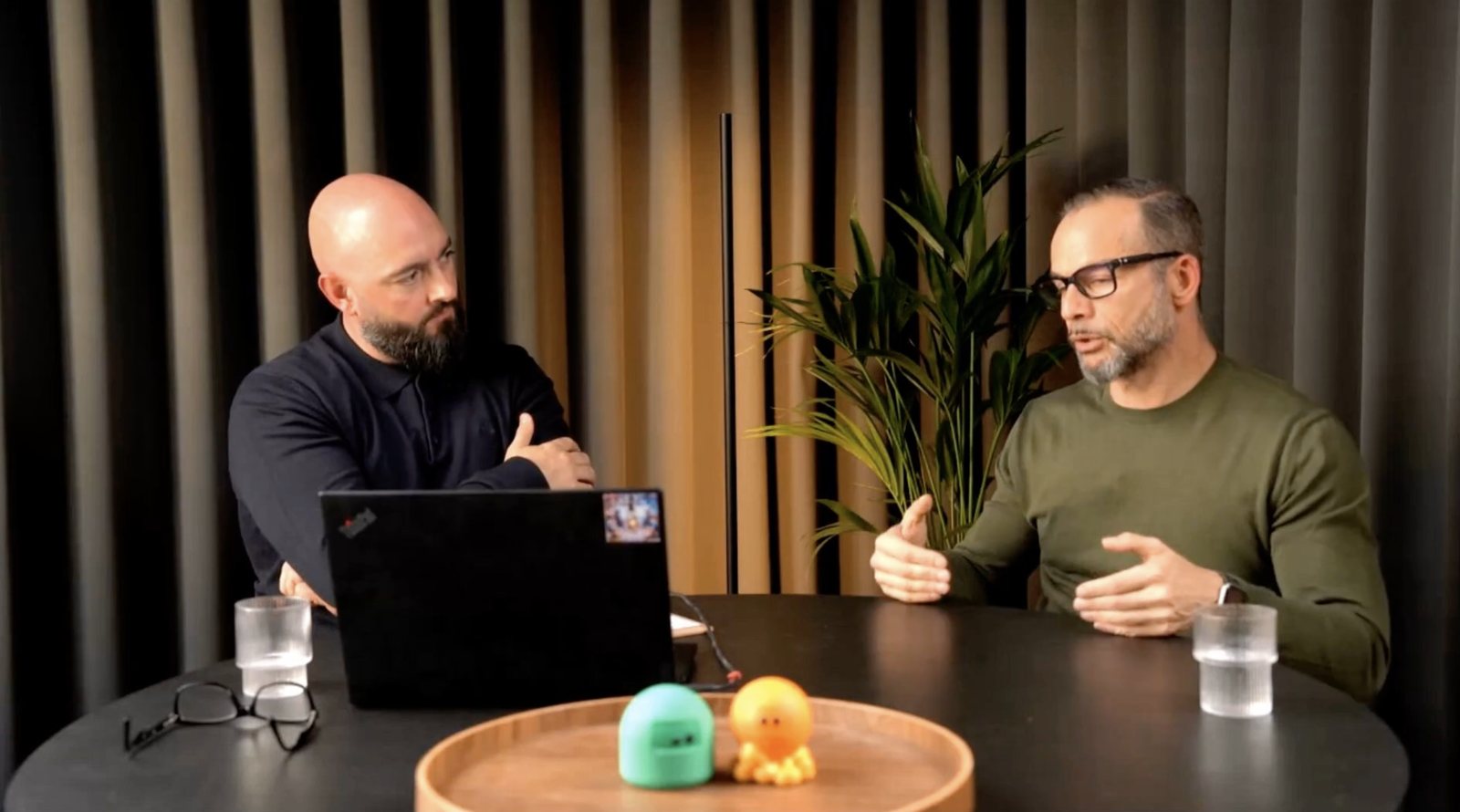
Watch the webinar on Templafy's site (The future of brand governance: Building AI that humans love and brands can trust, 60 minutes)
Agentic branding is the discipline of making brands intelligible, governable, and desirable in an AI-mediated world.
What does AI need from our brand before it can produce on-brand work?
Three layers, in this order. First the Brand Constitution: the governing law of the brand, what it stands for, the rules it follows and the trade-offs it makes when priorities compete. Guidelines were written for people to interpret; a constitution has to be precise enough for a machine, with far more detail on what we do, which trade-offs apply and when. Second, what I call the Brand Brain: a governed, searchable memory of everything the brand knows, its approved messaging, product facts, templates, customer stories and proof points. Third, the connection that brings both into the workflows and agents where the work is done, through an API and MCP, the protocol AI tools use to reach approved systems.
“The constitution is the governing law. The knowledge graph is everything the brand knows. Then, through API and MCP, you expose that information to the workflows and agents.”
Related: Brand constitution vs brand guidelines · The Agentic Brand Operating System
Why does our company's AI give generic or wrong answers about us?
Because it can't reach what the company knows, or what it reaches is scattered and out of date. Most enterprises already hold the knowledge AI needs. It sits in different systems and belongs to different teams: brand assets in one place, sales content in another, proof points in old presentations and personal folders. A person struggles to find the approved version; an agent cannot find it reliably at all. Structure that knowledge so it can be retrieved, and give it owners, so outdated claims come out and new proof goes in. It is not a one-off migration.
“If a personal productivity AI isn't connected to a knowledge base, and that knowledge isn't structured correctly, your AI agent isn't going to be able to give you many valuable answers.”
Related: The Agentic Brand Operating System
How do we keep the brand consistent across countries and teams, and still let them adapt?
Put the governance upstream, into the system, and it is already in place when a local team starts work. Today that check depends on each person finding the right template, pasting approved messaging into a prompt and remembering the rules before they send. At enterprise scale those are weak controls. When the constitution and the brand's knowledge are connected to the tools people already use, the centre manages what has to stay the same, and regional teams adapt approved material for their customers and markets.
“With an agentic brand system, we're putting brand governance upstream into the system. Therefore, downstream, in a local or regional workflow, the governance is already embedded and taken care of.”
Related: The Brand Constitution
Where should we use AI first to get value beyond personal productivity?
In one high-value job, redesigned end to end. Most organisations have given their people AI for summaries, emails and first drafts. That saves time, and it leaves the process around the work unchanged. Pick a job that takes real time and runs across several steps, systems and people. A sales proposal is a good example: finding the customer information, the right template, the approved messaging and product details, the legal language, the review. Redesign it around the constitution and the brand's knowledge, so the seller starts from the outcome and the system brings the right inputs together, governed.
“Brands need to become the logic and infrastructure that guides every decision, interaction, and piece of content. That is how organizations can use AI at scale without losing what makes their brand meaningful.”
Related: Is AI an efficiency play, or can it grow the business?
How do we keep AI costs under control as every team starts building with it?
By choosing the workflows as a team. Every model call uses tokens, and tokens cost money. If every employee builds their own automations, usage runs out of hand. Focus on shared workflows that solve significant problems and create value you can measure, and both the cost and the control come back.
“Token usage goes completely out of hand when you enable your entire team to build their own workflows. But if you focus the team on workflows you're going to tackle as a team, then you can constrain it and control it.”
Related: Who governs AI-made brand work, and what should the brand team own?
How do we keep what AI knows about our brand up to date?
With a loop, and with people who own it. A brand system cannot stand still while the market, the customers and the business move. Agents sense what is happening, in performance data, customer feedback, competitors and how AI assistants describe you; the team decides what to act on; the work is orchestrated and delivered; and what was learned goes back into the brand's knowledge, so the next piece of work starts better informed. The brand and creative teams move toward curation: defining the constitution, keeping the knowledge current, reviewing what comes out, improving the workflows.
“The brands of the future will be the ones able to deliver their meaning in context, at infinite scale, in the moments that matter.”
Related: The Agentic Brand Operating System · How will brand management work in a few years?
About this session
Templafy Talks is Templafy's webinar series on document automation, AI and the systems enterprises need to get value from them. John Tiniakos-Rasmussen of Templafy and I held this session live on 27 August 2026 at Templafy's office in Copenhagen, under the title The future of brand governance: Building AI that humans love and brands can trust. Templafy published its write-up on 14 September 2026; the recording is on Templafy's site. Quotes on this page are from Templafy's write-up.
Sources
- Templafy, “7 ways to prepare your brand for AI agents”, 14 September 2026 (updated 29 September 2026)
- Templafy, “The future of brand governance: Building AI that humans love and brands can trust”, Templafy Talks, recording, 27 August 2026